
Dementia & Brain Health Resources: Latest Webinars & Tools for Healthy Aging
 At WE Seniors, our mission is to support healthy, active, and informed aging for older adults across the greater Edmonton area. As part of this commitment, we are expanding our dementia and cognitive health resources to ensure seniors, caregivers, and families can access trusted, up-to-date information.
Dementia affects many members of our community, and staying informed is one of the most powerful tools for early awareness, prevention, and confident decision-making. This page brings together reliable educational materials from respected sources—such as the McMaster Optimal Aging Portal, the BrainXchange, and the Alzheimer Society of Canada—along with new resources that we will continue to add over time.
By sharing research-based webinars, emerging studies, practical tools, and easy-to-understand educational content, we aim to empower older adults to stay engaged, supported, and proactive about their brain health.
Upcoming Webinar
Alzheimer’s Month 2026: What older adults need to know
January is Alzheimer’s Month, a time to raise awareness about Alzheimer’s disease and other forms of dementia and to share trustworthy, evidence‑based information about brain health.
Alzheimer’s disease is a progressive brain disorder affecting memory, thinking, and daily function, and it’s not a normal part of aging. Early signs can include memory loss that interferes with everyday life, difficulty with planning or conversations, and confusion about time or place. While there’s no guaranteed way to prevent Alzheimer’s, research shows that staying physically active, managing health conditions, staying socially connected, and challenging your brain with new activities may help support overall brain health.
This resource from McMaster Optimal Aging offers reliable guidance for older adults and caregivers looking to understand risk, recognize early symptoms, and take informed steps in support of cognitive well‑being.
Read more: Alzheimer’s Month 2026: What older adults need to know
HELP FOR DEMENTIA
Launched in 2014 by the Alzheimer Society of Alberta and Northwest Territories, the mission of HelpForDementia is to bring awareness to Alzheimer’s disease and other forms of dementia; help alleviate the personal and social consequences of the disease; provide education and support programs; and, promote and fund research into the cause, prevention and cure.
Join Us for an Evening with the Alzheimer Society – Your Questions Answered
-
Wednesday, March 18, 2026
-
7:00 PM MST – 8:30 PM MST
Spend an evening with the Alzheimer Society as we address your questions and concerns about dementia.
This interactive webinar offered a unique opportunity to engage directly with our experts, gain valuable insights, and find support.
Whether you are a care partner, family member, or simply interested in learning more, this session was designed for you.
Want to view more Resources from HelpForDementia?
Words of Wisdom – Alzheimer’s Awareness Month Resource
(From the Schlegel-UW Research Institute for Aging)
January is Alzheimer’s Awareness Month. To mark this important time, Words of Wisdom, created by the Schlegel-UW Research Institute for Aging (RIA), shares eight powerful resources co-created with people living with dementia and their care partners.
The “People Living with Dementia Share Their Wisdom” panel series showed just how powerful personal experiences can be. The 17 panellists, all of whom are either living with dementia or supporting someone who is, shared insights and personal stories that can help others on a similar journey. The collective wisdom led to the creation of these eight resources, the Words of Wisdom series, which aim to provide support, guidance, and reassurance during some of dementia’s most challenging moments.
Whether you are a person living with dementia or supporting one, these guides are here to empower, inform, and inspire you.
Other Brain Resources
McMaster Optimal Aging Portal

Visit our RESOURCES to learn more about McMaster Optimal Aging Portal.
VIDEO POST 01 – Dementia risk reduction: A how-to guide
Currently, treatments for dementia are limited. This makes prevention that much more important. The idea that you could do something about your risk of dementia is a relatively new concept. In this webinar, Drs. Anthony Levinson and Richard Sztramko discuss dementia and how you can decrease your personal risk of developing it by addressing various modifiable risk factors.
VIDEO POST 02 – Genetics and dementia: What’s the connection?
VIDEO POST 03 – Is dementia a vaccine-preventable condition?
Heads Up for Healthier Brains – Alzheimer Society of Canada

Help for today. Hope for tomorrow… ®
Recording – LIFE (Lifestyle Interventions to Fend off dEmentia): A Systematic Review and Network Meta-Analysis of Lifestyle Interventions to Prevent Dementia
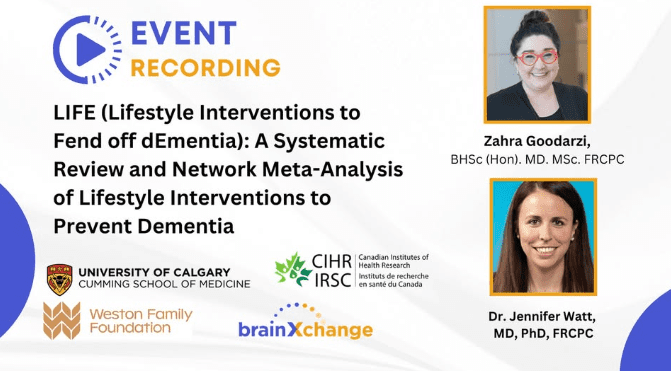
Join this webinar series, featuring Zahra Goodarzi, MD. MSc. FRCPC and Jennifer Watt, MD. PhD. FRCPC.They will review analyses of studies that explore lifestyle interventions for the reduction in cognitive impairment in healthy populations.
This event was hosted on November 19th, 2025.
Want to view more Prevention Resources from BrainXchange?
brainXchange

Cognitive Activity and Brain Health: What the Evidence Shows and Practical Strategies
Presented by Dr. Sylvie Belleville
This was hosted on January 27, 2026
Being cognitively active was found to support brain health and potentially lower dementia risk. This webinar explains why and reviews evidence on mentally engaging activities relevant to dementia risk and cognitive health.
Participants will learn about a range of cognitively stimulating activities older adults can do, along with practical steps to incorporate more of them into daily routines.
DYING WITH DIGNITY

Navigating a dementia diagnosis: What you need to know
Presented by: Dianne Godkin, PhD
Tuesday, April 14
1:00 p.m. MST
We know Advance Care Planning matters. We know why it’s important. But why do so many of us struggle to get across the finish line and complete our Advance Care Directives? When we asked folks that had recently requested a DWDC kit, 81% said they had not completed their Advance Care Directive, citing reasons such as a lack of time, feeling like they didn’t need to prioritize it, or being afraid to start what can be an emotional conversation.
This year, Dying With Dignity Canada is doing things differently. We’re dedicating the entire session to the practical tips, proven strategies, and lessons learned that will help you cross the finish line.
On Tuesday, April 14th at 3:00 p.m. Eastern, Dianne Godkin joins us to give you the clarity and confidence to take action and complete your Advance Care Directive today, not someday. Wherever you are in the process—whether you don’t know how to start or feel overwhelmed by it—this webinar will help you get across the finish line.
Not able to attend? Register anyway and we will send you a link to the recording following the live session.
Dying with Dignity

What Matters to You: Advance Care Planning & Goals of Care
Presented by: Jennifer Zelmer, RNBN, M.Ed
Thursday, April 16
1:00 – 3:00 p.m. MST
Advance Care Planning is the process of thinking about, talking about, and documenting your wishes for health care. It is how you can have your wishes known by those close to you should you become unwell or unable to speak for yourself.
This Advance Care Planning Day on April 16th at 1:00pm Mountain, we’ll be joined by the AHS’ Jennifer Zelmer to dive into the principles and practices of advance health care planning.