
Fall Prevention Resources
Did You Know? Falls are a major health concern for older adults. In Canada, between 20% and 30% of seniors fall each year, and falls remain the leading cause of injury-related hospitalizations among people aged 65 and older. They can lead to broken bones, loss of confidence, reduced mobility, and even long-term care placement. From 2017 to 2022, deaths due to falls among older Canadians increased by more than 50%, and in recent years there have been tens of thousands of fall-related hospitalizations and emergency visits each year—underlining the importance of prevention and awareness for older adults and their families.
At We Seniors, we want to help older adults stay safe, independent, and confident in their daily lives. That’s why we’ve gathered trusted fall prevention information, tools, and supports to help you understand risks and take simple steps to reduce the chance of falling. Because falls are common—but preventable—raising awareness and sharing practical resources can make a real difference in everyday safety and wellbeing.
Below is a list of fall prevention resources and tools you can use at home or share with someone you care about. Check back regularly as we update this page with new information, tips, and community supports.
Falls among older adults in Canada
Summary of the most recent national-level statistics on fall-related deaths, hospitalizations, and emergency department (ED) visits among older adults in Canada.
Last updated: 2025-11-28
READ THE SUMMARY HERE.
Webinar- Elders Moving Elders
Date: Wednesday, October 21, 2026
Time: 10:30 am – 12:00 pm (MT)
Elders Moving Elders is a new initiative that has been developed to support Elders throughout the province of Alberta through daily physical activity and peer leadership principles.
Elders in Motion is funded by New Horizons and AGLC, and is coordinated and facilitated by the Physical Culture Association. The program has been operating for 4 months in 10 rural and 5 urban sites in Alberta. Key partners include Friendship Centres across the province, Primary Care Network, community leagues, and older adult active aging stakeholders.
The Elders learn basic exercises with portable equipment that they can do at home, in their community with friends, or just 1:1 with family or friends. This program focuses on creating a safe, fun, inclusive and welcoming environment that fosters strong relationships and sustainable growth for seniors.
The program will continue to grow across Alberta with expressed interest. Join us to learn about this exciting new initiative!
Webinar- Nutrition Check-up for Older Adults…Let’s talk about it.
Date: Wednesday, November 18, 2026
Time: 11:00 am – 12:00 pm (MT)
Did you know that recent Alberta research found that more than 50% of older adults living at home are at nutrition risk? When a person is at nutrition risk it impacts their overall well-being and quality of life. There are often more health concerns such as increased falls, longer recovery from illnesses and more hospitalizations when nutritional needs are not met in older adults.
Join this session to learn about nutrition risk and malnutrition in older adults, and how we can prevent or delay it just by completing a validated nutrition screen. The Nutrition Check-up for Older Adults (55+) only takes about 5-10 minutes to do, and anyone can complete it. Agencies and clinics have implemented the Nutrition Check-up into their older adult programming, and older adults themselves can also complete it on their own!
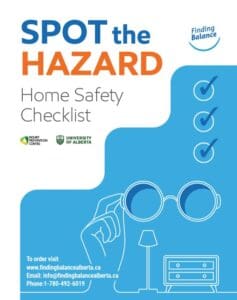
Spot the Hazard – Home Safety Checklist
This checklist guides you to:
- Identify hidden hazards in your home
- Prevent falls and injuries
- Maintain your independence
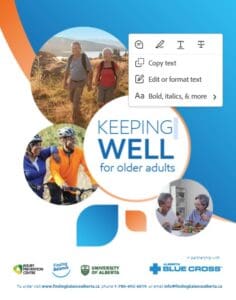
KEEPING WELL for older adults – Booklet
This booklet was created to help older Albertans keep well, active and connected to lower their risk of falling. It covers a wide range of topics — from physical and mental well-being to home safety, healthy eating, medication awareness, and fraud prevention.
Is walking enough to prevent falls?
The good news is that adding a few simple exercises to your regular walks can help strengthen your legs and build your balance, reducing your risk of falls so you can stay active and continue to enjoy your walks.
3 ways we can “dance” our way to better health
Research highlights that different dance-related activities can decrease falls, boost brain health, and improve physical function in different groups of older adults.
Vision and Fall
Clear vision is critical to preventing falls. Ensuring your eyeglass prescription is correct is a good first step in fall prevention, but your eye health is equally important.
More details on how an optometrist can help HERE.
Tips to Walk Safely in Winter
Walking can be challenging during winter months especially for older adults.
Learn more how you can navigate the challenges HERE.
Footwear And Footcare Tips For Older Adults
As you age, taking care of your feet and wearing proper footwear are important to help prevent falls.
Check out the tips on taking care of your feet and choosing a pair of proper shoes HERE.
How To Get Up By Yourself After A Fall
Learn what to do if you have a fall HERE.
Try a Home Exercise Routine
Be Active! Adults aged 65 years and older should accumulate at least 150 minutes of moderate to vigorous intensity aerobic physical activity per week in bouts of 10 minutes or more. Plus, it is beneficial to add muscle and bone strengthening activities, like exercising with bands, at least 2 days per week.
Check out this everyday exercise routine HERE.
Band Exercises For Older Adults
Exercising with resistance bands is a great way to build strength in all parts of your body – legs, arms, and core. Bands are portable and inexpensive. You can use them at home, outdoors, or at the gym.
Learn more about how to exercise with bands HERE.
Finding Balance – The Alberta Health Services Fall Prevention initiative
Finding Balance is an education program and public awareness campaign created by the Injury Prevention Centre at the University of Alberta’s School of Public Health. It’s designed to help adults aged 55 and over stay independent, safe, and informed.
For more information on fall prevention, visit the findingbalancealberta.ca website
Sign up to receive their eNewsletter, as well as invitations to our webinars and other events.