
Alzheimer’s Awareness Month Resources
Our Active Aging Series is all about giving seniors and their families reliable information to help them stay safe, informed, and confident as they age in place. On Thursday, January 29, 2026, we were grateful to welcome knowledgeable presenters who guided us through topics related to dementia awareness, brain health, and estate planning. Here are some key takeaways from each presentation.
Below are some of the key points shared in each presentation.
Understanding Dementia & Early Detection AND Reducing Risks, Promoting Brain Health & Accessing Support
Presented by Alzheimer Society of Alberta and Northwest Territories
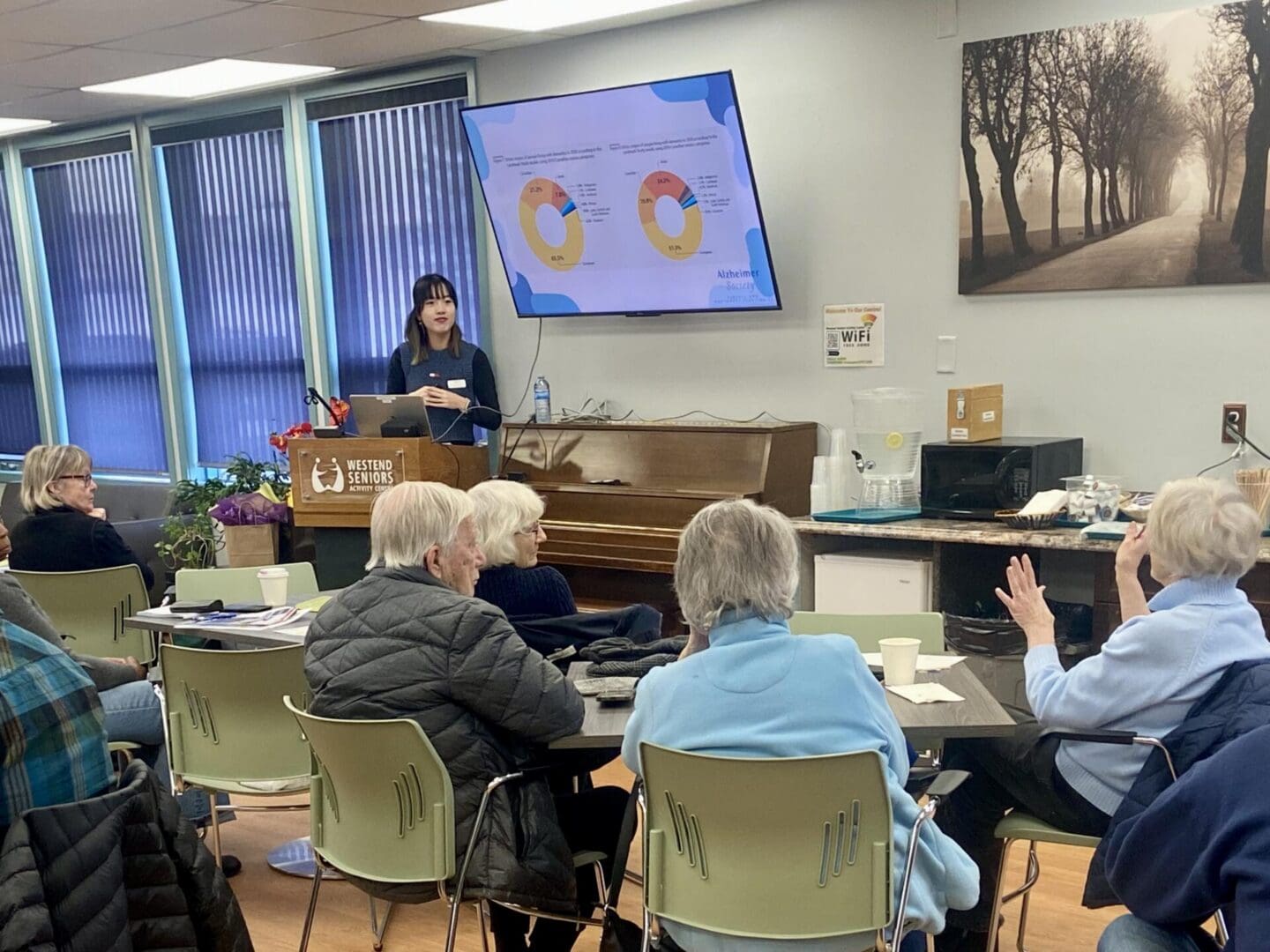
Fianee started by introducing what dementia is, how it differs from normal aging, and how conditions such as Alzheimer’s disease affect memory and daily life. Participants learned how to recognize early warning signs and understand key risk factors, including age, family history, health conditions, and lifestyle influences. The importance of early detection for timely support and planning was also highlighted.
Some helpful reminders:
1. Are all your services free? Can I access them without a formal diagnosis?
All our core services are completely free for the public. This includes educational sessions, support groups, one-on-one support, the First Link program, and resources on HelpForDementia.ca.
You do not need a doctor for referral or a formal dementia diagnosis to access these services. If you, a family member, or a friend have concerns about memory or brain health, you can reach out directly for information, support, and guidance.
2. After a dementia diagnosis, is there a standard timeline for how fast the disease progresses?
There is no standard or fixed timeline for dementia progression. The speed and pattern of progression depend on many factors, including the type of dementia, the person’s overall health, age at diagnosis, and available support.
We have seen very different experiences in real life—some individuals remain in the early stage for 10 years or more, while others experience rapid decline within one to two years after diagnosis. For example, Alzheimer’s disease often progresses gradually over many years, while some types, such as certain forms of vascular dementia or dementia with Lewy bodies, can progress more unpredictably or more quickly. Because of this wide variation, dementia care is always individualized. Ongoing medical follow-up and support planning are important at every stage.
3. Is dementia hereditary?
Dementia can have a genetic component, but the vast majority of cases are not directly inherited. Only a small number of dementia types—such as early-onset Alzheimer’s disease and Creutzfeldt-Jakob disease—have strong, direct genetic links, and these are rare. For more common forms, like late-onset Alzheimer’s disease and vascular dementia, genetics may increase risk but do not determine whether someone will develop dementia.
Lifestyle factors, chronic health conditions, social connection, and environment all play major roles. Having a family history may slightly increase risk, but it does not mean dementia is inevitable. Managing conditions like high blood pressure and diabetes, staying socially and mentally active, and maintaining a healthy lifestyle can help reduce risk.
4. How do I tell the difference between normal aging and dementia?
The key difference is whether the changes interfere with daily life. Normal aging may involve occasional forgetfulness, while dementia involves symptoms that worsen over time and affect independence, such as difficulty managing daily tasks, getting lost in familiar places, or significant changes in judgment or behavior.
5. Can only older people get dementia?
No. While dementia is more common after age 65, younger-onset dementia does exist. Some types, such as frontotemporal dementia, can affect people in their 40s or 50s. Persistent changes in memory, thinking, behavior, or language should be taken seriously at any age.
6. How can I tell the difference between dementia and depression?
Depression mainly affects mood and motivation, and cognitive symptoms often improve with treatment. Dementia involves a progressive decline in cognitive abilities and daily functioning. Because symptoms can overlap—and sometimes occur together—a professional medical assessment is important.
7. If I notice early warning signs, which doctor or service should I contact first?
In Canada, a family doctor is usually the first point of contact and can provide referrals to specialists if needed. Individuals and families can also contact the Alzheimer Society directly, as a diagnosis or referral is not required to access information and support through First Link.
8. Is there a cure for dementia?
Currently, there is no cure for most types of dementia, including Alzheimer’s disease. However, there are medications and non-drug interventions that can:
- Ease symptoms such as memory loss, mood changes, and behavior issues
- Slow the progression of the disease in some cases
- Greatly improve quality of life for both the person living with dementia and their caregivers
Lifestyle changes, cognitive stimulation, social activity, and proper care are also important. Early intervention leads to the best outcomes.
9. Is it better for someone with dementia to stay in a familiar environment, or to go out and experience new places?
There is no one-size-fits-all answer—the best approach depends on the individual and the stage of dementia. In general, familiar environments provide a sense of safety and stability, especially as dementia progresses. Familiar routines, surroundings, and people can help reduce confusion, anxiety, and agitation.
At the same time, meaningful outings and social engagement can be very beneficial, particularly in the earlier stages. Going out does not mean constant change or busy travel. Simple, familiar activities—such as visiting a favorite cafe, going for a walk in the neighborhood, attending a regular community program, or spending time with trusted friends—can support emotional well-being and quality of life.
The key is balance:
- Keep daily routines and environments predictable
- Introduce outings that are familiar, purposeful, and not overwhelming
- Watch how the person responds and adjust accordingly
If an activity causes distress or confusion, it may need to be modified or avoided. Dementia care should always be flexible and person-centered, focusing on comfort, dignity, and connection.
Enduring Powers of Attorney – Why you should care?
Presented by Shelley Smith, Venture Law Group LLP
 .
.
An Enduring Power of Attorney (EPA) is an estate planning document that allows someone you trust to manage your financial and legal matters if you ever become unable to do so yourself. Shelley from Venture Law LLP explained that this is different from a Personal Directive, which covers health and personal care decisions, and a Will, which outlines how your assets are distributed after death. All three documents are important for planning ahead and protecting your wishes.
Choosing the Right Attorney
The term “attorney” in this context does not mean a lawyer—it refers to the person you appoint to manage your finances. While it may seem fair to appoint multiple children, this can sometimes lead to conflicts. Choosing one person, or clearly outlining decision-making rules, can help prevent disagreements. Open conversations with your chosen attorney are also important to ensure they understand your expectations.
Location and Responsibility
Your attorney can live out of province, but having someone nearby can make it easier to manage responsibilities. Consider how your attorney might act if they know they are in charge—Shelley highlighted the importance of trust and accountability in decision-making.
Planning Ahead Matters
An EPA helps ensure your financial decisions reflect your wishes, whether you want to continue travelling, “age in place,” or maintain other aspects of your lifestyle. Planning ahead can also reduce stress for family members and provide peace of mind for everyone involved.
Important Note
This session provided general educational information. Individuals are encouraged to seek independent legal advice based on their personal circumstances.